7 Placement Steps to Prepare for Large Floor Plants
Large floor plants reorient indoor air. They draw moisture from soil, transpire it through stomata, and regulate relative humidity by 5-10% in a 200-square-foot room. Learning how to prepare a living room for large floor plants begins with substrate selection, light mapping, and structural load assessment. A mature Ficus lyrata or Monstera deliciosa can weigh 40-60 pounds when potted in a 14-inch container with moist loam. Before acquisition, measure your ceiling height, map natural light angles across four hours, and confirm floor joists support concentrated mass.
Materials
Substrate pH governs nutrient availability. Tropical aroids prefer pH 5.5-6.5, while dracaenas tolerate 6.0-7.0. Mix 40% peat moss or coir, 30% perlite, 20% composted bark, and 10% worm castings by volume. Amend with 4-4-4 organic fertilizer at 2 tablespoons per gallon of medium to establish slow-release nitrogen. For palms, add dolomitic lime at 1 teaspoon per gallon to buffer acidity and supply magnesium.
Containers require drainage holes and saucers with 1-inch clearance. Terracotta permits gas exchange but dries quickly. Glazed ceramic retains moisture for 48-72 hours longer. Plastic nursery pots are lightweight but trap heat near roots in south-facing windows. Select containers 2-4 inches wider than the root ball to allow one season of growth before the next transplant.
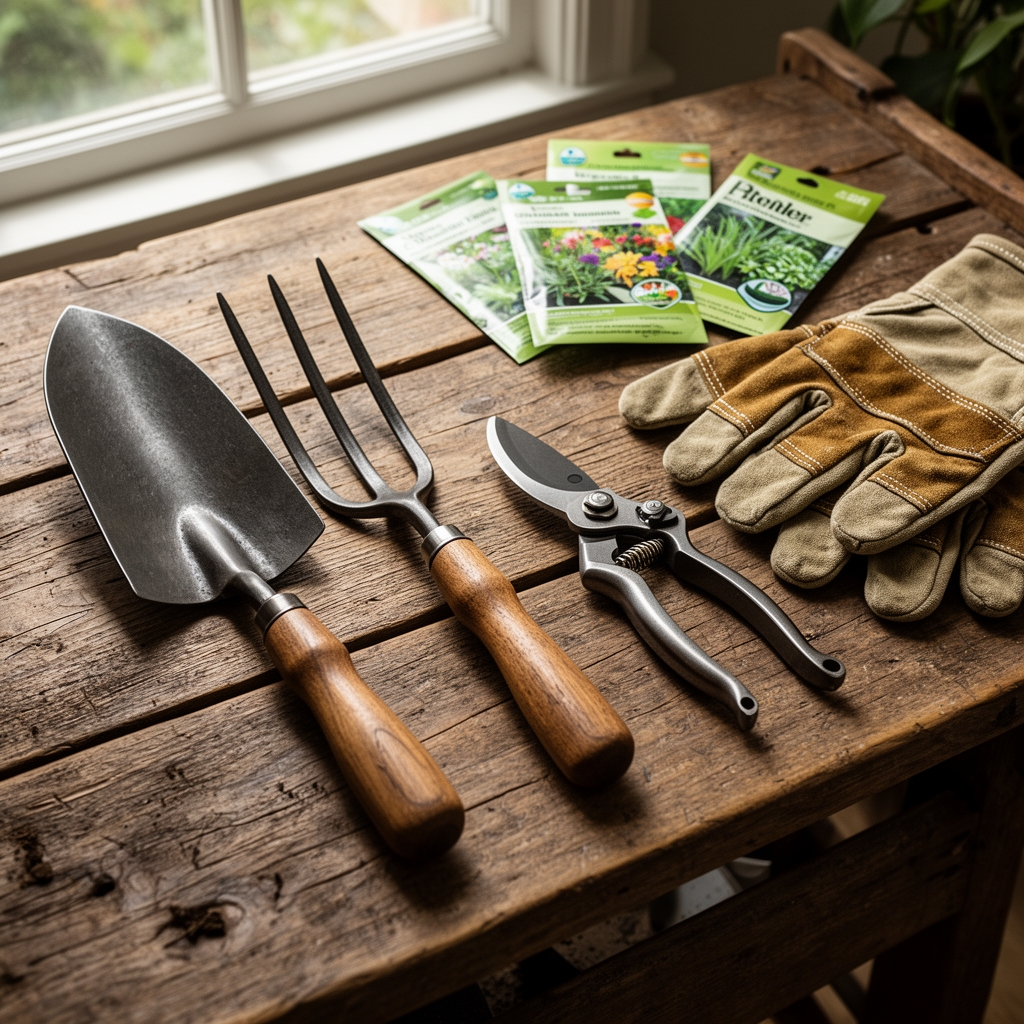
Install a drip tray with pebbles to catch overflow and prevent tannin stains on hardwood. Purchase a 30-inch plant dolly rated for 80 pounds to enable rotation every two weeks. Acquire a soil moisture meter with a 10-inch probe to monitor saturation at root depth, not surface dryness.
Timing
Indoor placement operates independently of hardiness zones, but seasonal light cycles govern growth phases. In USDA Zones 5-7, south-facing windows deliver 4-6 hours of direct sun from November through February. From March through May, increase that to 8-10 hours as the solar declination rises. Tropical species enter active growth when day length exceeds 12 hours and ambient temperature stabilizes above 65°F.
Avoid repotting or relocating large specimens between October and January. Root activity slows when soil temperature drops below 60°F. Schedule major moves for late March or early April when auxin distribution accelerates and adventitious roots form within 10-14 days.
Phases

Sowing: Large floor plants are rarely started from seed indoors. Nursery stock arrives in 10-14 inch grow pots. Inspect the root ball for circling roots. Use sterilized pruners to excise any roots that spiral more than 270 degrees. This prevents girdling as the plant matures.
Pro-Tip: Dust exposed roots with mycorrhizal inoculant containing Glomus intraradices at 0.5 grams per plant. The fungal hyphae extend root surface area by 10-100 times, improving phosphorus uptake in low-light interiors.
Transplanting: Water the root ball 24 hours before the move. Fill the new container one-third full with prepared substrate. Center the root crown 1 inch below the pot rim. Backfill in 2-inch lifts, tamping gently to eliminate air pockets but preserve structure. Water until drainage begins, then allow the top 2 inches to dry over 5-7 days.
Pro-Tip: Apply a 1-inch top-dressing of fine orchid bark. This mulch reduces evaporation by 30% and prevents soil from splashing onto lower leaves during irrigation.
Establishing: Position the plant 3-6 feet from an unobstructed east or west window for diffuse morning or afternoon light. Rotate the container 90 degrees every 14 days to equalize auxin distribution and prevent phototropic lean. Monitor new leaf emergence. Healthy Ficus elastica produces one leaf every 10-14 days under optimal conditions.
Pro-Tip: Mist aerial roots of Monstera species with distilled water at 60-70% relative humidity. These structures absorb moisture and guide the plant toward vertical supports, reducing sprawl.
Troubleshooting
Symptom: Marginal leaf necrosis with yellow halos.
Solution: Excess soluble salts from overfertilization. Leach the pot with 2 gallons of distilled water per gallon of soil. Reduce fertilizer concentration to half-strength.
Symptom: Sudden leaf drop with no chlorosis.
Solution: Temperature shock from cold drafts. Maintain 65-75°F. Move plants 12 inches away from exterior walls in winter.
Symptom: Speckled stippling on leaf undersides, fine webbing.
Solution: Two-spotted spider mites (Tetranychus urticae). Spray with 2% neem oil solution at 7-day intervals for three cycles. Raise humidity above 50% to suppress reproduction.
Symptom: Soft, brown roots with sour odor.
Solution: Pythium root rot. Unpot immediately. Excise affected roots, repot in fresh medium, and withhold water for 10 days. Reduce irrigation frequency by 30%.
Maintenance
Apply 1 inch of water when the top 2 inches of substrate dry completely. For a 12-inch pot, this equals approximately 0.5 gallons every 7-10 days in standard indoor conditions. In summer, increase to every 5-7 days.
Feed with liquid 3-1-2 fertilizer diluted to 150 ppm nitrogen every 14 days from March through September. Suspend feeding from October through February.
Wipe leaves with a damp microfiber cloth monthly to remove dust and restore gas exchange. Prune dead foliage at a 45-degree angle, 0.25 inches above a node.
FAQ
How much light do large floor plants need indoors?
Most tropical species require 100-200 foot-candles for maintenance and 200-500 foot-candles for growth. Measure with a light meter 12 inches from the canopy.
Can I use tap water?
If total dissolved solids exceed 150 ppm or chlorine is detectable by scent, let tap water stand uncovered for 24 hours before use.
How often should I repot?
Every 18-24 months, or when roots protrude 1 inch from drainage holes. Increase pot size by 2 inches in diameter per cycle.
What is cation exchange capacity?
CEC measures a substrate's ability to retain positively charged nutrients like calcium and magnesium. Aim for 10-20 meq/100g for tropical species.
Do I need supplemental lighting?
If natural light drops below 75 foot-candles, add full-spectrum LED grow lights at 20 watts per square foot, 12 inches above the canopy, for 12-14 hours daily.