9 Drainage Benefits of Using Volcanic Rock Substrate
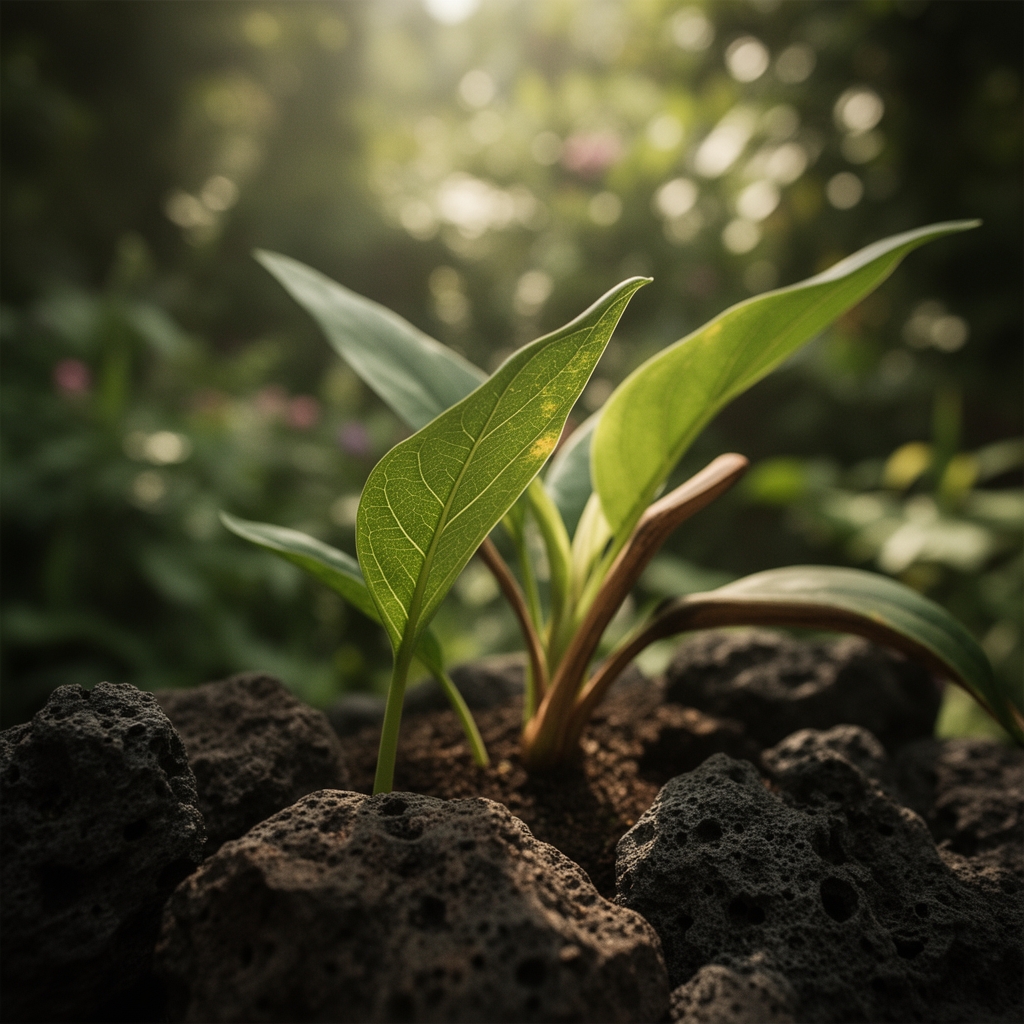
Ceramic pots retain moisture for days. Plastic containers trap water at the bottom. Standard potting soil compacts and suffocates roots within months. Using a volcanic rock substrate for indoor pots solves these problems by creating drainage channels that remain open for years. The angular structure of scoria, pumice, and lava rock prevents the collapse that organic matter undergoes as it decomposes. Water moves through volcanic substrates in seconds, not minutes, forcing roots to pursue moisture aggressively and develop dense, fibrous networks.
Materials
Primary Volcanic Components (pH 6.5-7.5):
- Red lava rock (1/4 to 1/2 inch): Iron oxide content provides trace elements
- Pumice (1/8 to 3/8 inch): Highest porosity at 85% air space by volume
- Scoria (3/8 inch): Basaltic composition with moderate water retention
Amendments and Nutrition:
- Worm castings (NPK 1-0-0): 10% by volume for cation exchange capacity
- Kelp meal (NPK 1-0.1-2): 2 tablespoons per gallon of substrate
- Biochar (pH neutral): 5% by volume to anchor beneficial bacteria
- Mycorrhizal inoculant: 1 teaspoon per 3-gallon container at establishment
Structural Additives:
- Coconut coir chips: 15% maximum to prevent water logging
- Pine bark fines (composted 12 months): 10% for slow organic matter release
Avoid peat moss entirely. It decomposes into paste within six months and destroys the drainage architecture.
Timing
Indoor cultivation eliminates frost concerns, but seasonal light cycles still affect establishment success. Begin transitions during spring (March-May in zones 5-9) when daylight exceeds 12 hours. This synchronizes with natural auxin production peaks and accelerates root colonization of volcanic substrates.
For tropical species (Monstera, Philodendron), maintain ambient temperatures above 65°F during the first three weeks post-transplant. Succulents and cacti tolerate immediate placement in volcanic substrates year-round if indoor temperatures remain between 55-80°F.
Winter transplants (November-February) require supplemental grow lights producing 200-400 foot-candles for 14 hours daily. Without adequate photosynthesis, roots fail to explore the substrate's air pockets.
Phases
Sowing Phase:
Volcanic substrates do not support seed germination directly. Seeds require moisture retention beyond what pumice or lava rock provide. Start seeds in a 50/50 mix of coconut coir and vermiculite. Transplant to volcanic substrate when the second set of true leaves emerges and roots reach 2 inches in length.
Pro-Tip: Dust seedling roots with endomycorrhizal fungi (Glomus species) immediately before transplant. The fungi colonize root hairs within 72 hours when in direct contact with volcanic rock surfaces.
Transplanting Phase:
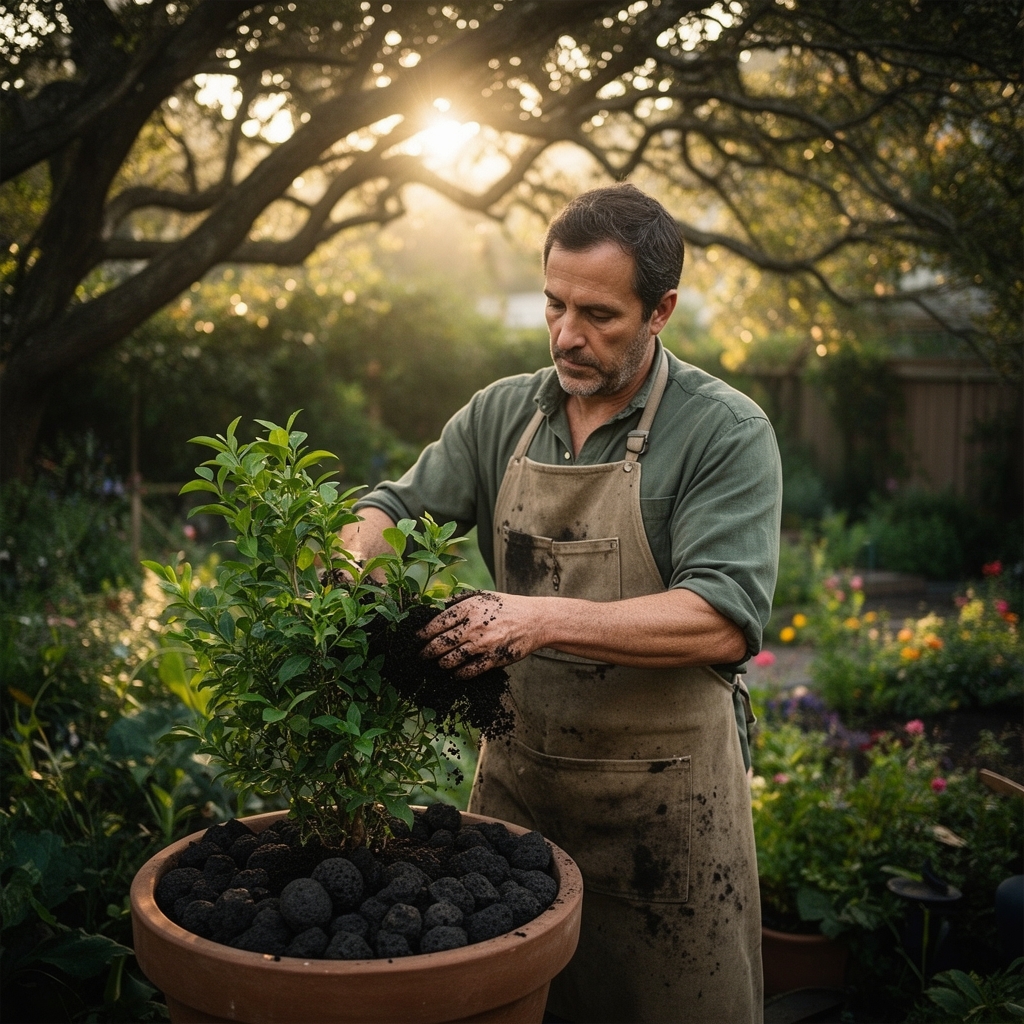
Remove 90% of old potting soil from root balls using a bamboo skewer. Residual organic matter creates anaerobic pockets when buried in volcanic substrate. Position the plant so the root crown sits 1/4 inch above the substrate surface. Fill around roots with dry material, then water thoroughly until drainage flows from bottom holes for 10 seconds.
Pro-Tip: Angle taproots 15 degrees off-vertical if present. This forces lateral root proliferation and prevents circling behavior common in vertical-walled containers.
Establishing Phase:
Roots penetrate volcanic substrates slowly for the first 14 days. Apply dilute liquid fertilizer (1/4 strength 3-1-2 ratio) every 5 days during weeks two through six. This compensates for the substrate's minimal nutrient reserves while roots expand their foraging range.
Monitor for new growth at apical meristems by day 21. Absence indicates transplant shock or insufficient mycorrhizal colonization.
Pro-Tip: Top-dress with 1/4 inch of fresh worm castings at day 30. Castings release humic acids that enhance cation exchange capacity on rock surfaces without compromising drainage.
Troubleshooting
Symptom: Yellowing lower leaves with brown crispy edges
Solution: Nitrogen deficiency from insufficient microbial activity. Apply fish emulsion (NPK 5-1-1) at 1 tablespoon per gallon weekly for three weeks. Increase worm casting percentage to 15% in future substrate batches.
Symptom: Wilting despite adequate watering frequency
Solution: Root desiccation from excessive air porosity. Mix 10% coconut coir chips into the substrate to extend moisture availability between waterings. Increase watering frequency to daily during establishment.
Symptom: White crusty deposits on rock surfaces
Solution: Mineral salt accumulation from hard water or over-fertilization. Flush substrate with distilled water at 3x the pot volume monthly. Reduce fertilizer concentration by half.
Symptom: Stunted growth and dark, mushy roots
Solution: Root rot from inadequate drainage holes or using volcanic dust instead of proper particle sizes. Drill additional 1/2 inch drainage holes. Screen substrate to remove particles smaller than 1/8 inch.
Symptom: Fungus gnats despite dry substrate surface
Solution: Larvae developing in residual organic matter pockets. Apply Bacillus thuringiensis israelensis (Bti) drench at label rates. Remove all organic top-dressing until gnats disappear.
Maintenance
Water when the pot feels 50% lighter than its post-watering weight. For a 3-gallon container, this typically occurs every 3-4 days. Apply 1.5 cups of water per gallon of substrate volume. Water must exit drainage holes within 5 seconds of application.
Fertilize every 14 days during active growth with a balanced 3-1-2 liquid formula at half strength. Reduce to monthly applications during winter dormancy. Granular slow-release fertilizers (Osmocote 14-14-14) perform poorly in volcanic substrates due to limited microbial activity.
Rotate containers 90 degrees weekly to prevent phototropic lean. Top-dress with 1/8 inch of fresh volcanic rock annually to replace dust-sized particles lost to breakdown.
FAQ
How long does volcanic rock substrate last?
Seven to ten years before particle degradation reduces drainage efficiency. Pumice degrades slowest, followed by lava rock, then scoria.
Can I reuse volcanic substrate after a plant dies?
Yes. Remove all root material, rinse with hydrogen peroxide solution (1:10 ratio), and allow to dry for 48 hours. Re-inoculate with mycorrhizal fungi before reuse.
Do all houseplants tolerate volcanic substrates?
Moisture-dependent species (ferns, Calathea, African violets) require 20-30% coconut coir amendments. Epiphytes and xerophytes thrive in pure volcanic mixes.
Why are my roots staying at the surface?
Insufficient watering depth. Volcanic substrates require saturation to the container's bottom. Surface-only watering encourages shallow root systems.
Should I sterilize volcanic rock before use?
Unnecessary unless visibly contaminated. Heat sterilization destroys beneficial microbe reservoirs in rock pores. Rinse with plain water to remove dust particles only.