9 Spacing Tips to Use a Garden Trowel for Bulbs
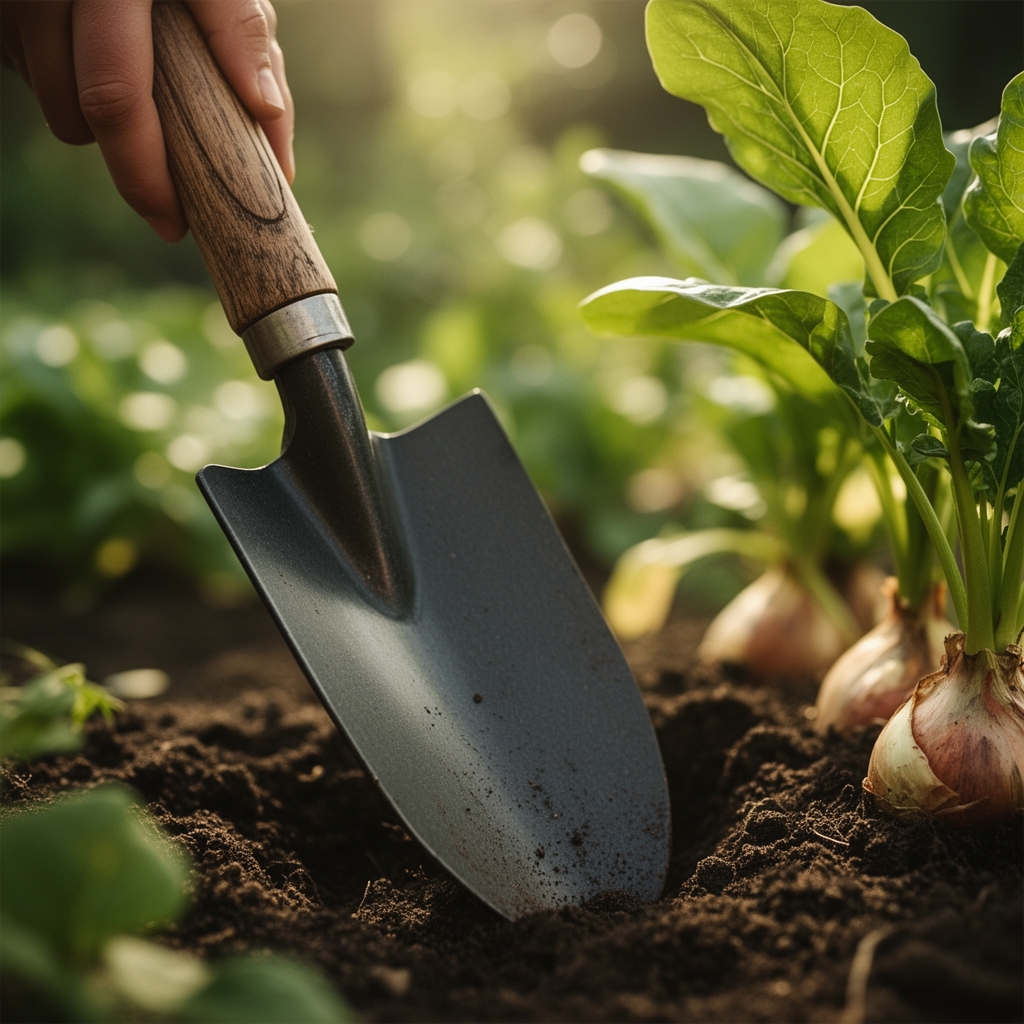
Using a garden trowel for vegetable bulb planting demands precision in depth, angle, and soil contact. The curved steel blade of a proper trowel allows you to measure each hole against the bulb's diameter, ensuring that garlic cloves sit 2 inches deep while shallots rest at 1 inch. The weight of loam against papery tunicates triggers auxin distribution in the basal plate, initiating root primordia within 72 hours when soil temperature holds between 50-60°F. A trowel's graduated markings eliminate guesswork. Each plunge creates a microenvironment where cation exchange capacity and oxygen porosity determine whether your onion sets will form tight necks or rot before harvest.
Materials
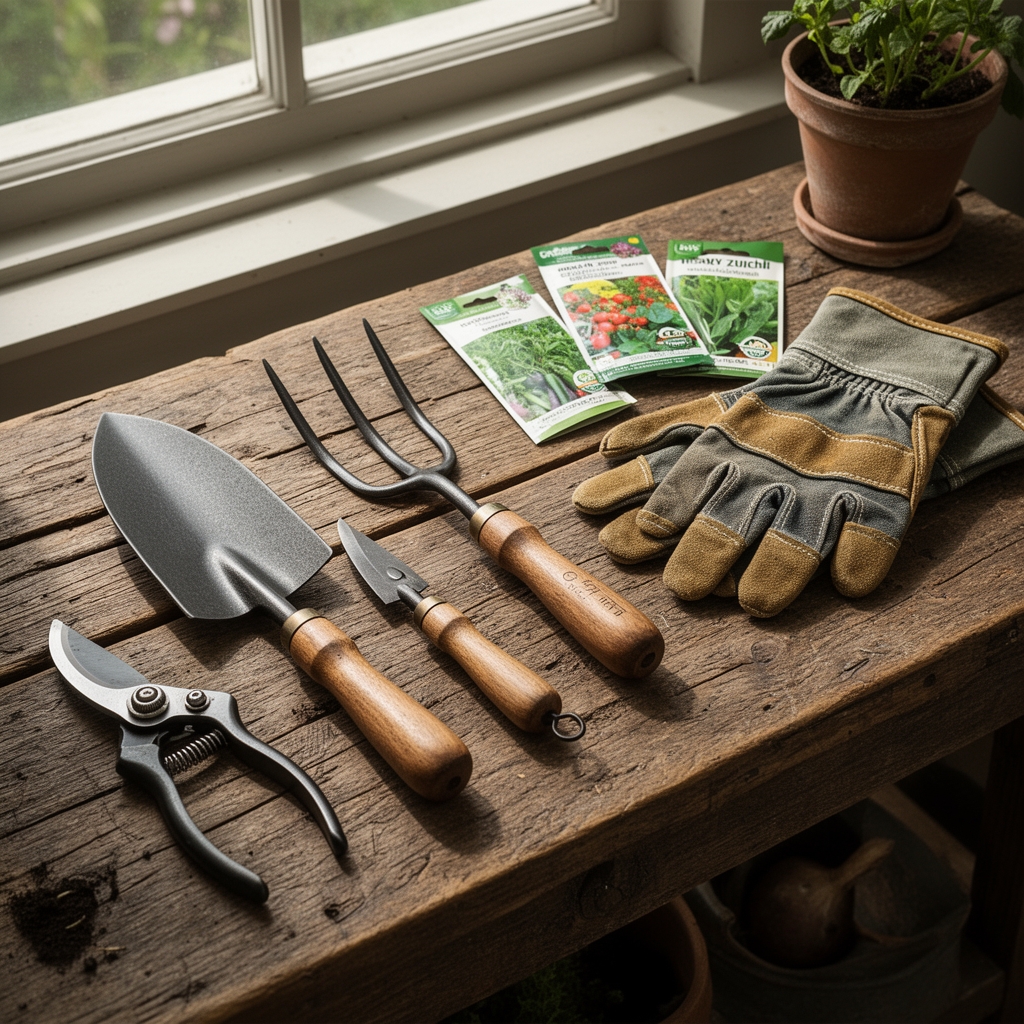
Select a stainless-steel trowel with a blade length of 6 inches and width of 3 inches. The handle should offer a 15-degree offset to reduce wrist strain during repetitive planting. Soil pH for Allium species should range from 6.0 to 7.0. Amend acidic beds with dolomitic limestone at 5 pounds per 100 square feet to raise pH by one full point. For fertility, incorporate a 4-4-4 organic meal derived from feather meal, bone meal, and kelp at 2 pounds per 100 square feet two weeks before planting. Phosphorus availability peaks when soil temperature exceeds 55°F, activating mycorrhizal fungi that colonize root hairs and extend nutrient uptake range by 10-fold. Add coarse sand or perlite if clay content exceeds 40 percent. Bulbs require drainage rates above 2 inches per hour to prevent anaerobic conditions that favor Fusarium basal rot.
Timing
Plant garlic cloves between hardiness zone-specific windows. Zones 3-5 require planting from late September through mid-October, allowing 4-6 weeks of root development before soil freezes at 32°F. Zones 6-7 extend the window to early November. Zones 8-9 shift planting to late November or early December when soil temperature drops below 60°F. Onion sets tolerate planting as soon as soil can be worked in spring, typically when forsythia blooms and soil temperature stabilizes at 45°F. Shallots prefer fall planting in zones 7-9, spring planting in zones 3-6. Calculate your last spring frost date and subtract 4 weeks for onion sets, 6 weeks for shallots in spring plantings. Leeks require a 10-12 week indoor start before transplanting 3 weeks prior to the last frost.
Phases
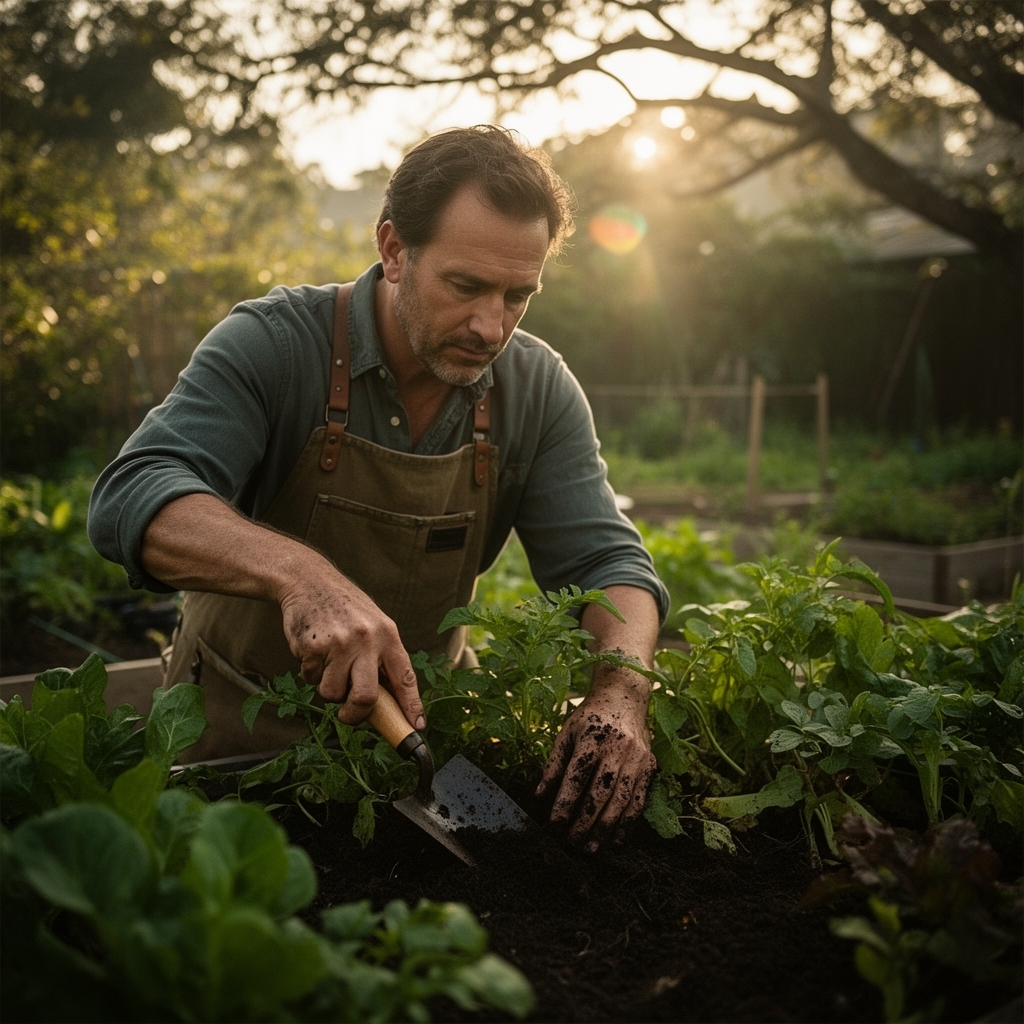
Sowing: Mark rows with stakes and twine at 12-inch intervals for garlic, 8 inches for onion sets, 6 inches for shallots. Insert the trowel vertically to the target depth. For garlic, measure 2 inches from soil surface to the tip of the clove's pointed end. Rotate the trowel 30 degrees forward and back to widen the hole without compacting sidewalls. Drop the clove pointed-end up. Backfill with the excavated soil, pressing firmly to eliminate air pockets that desiccate emerging radicles. Pro-Tip: Dust each clove with Trichoderma harzianum powder at 0.1 grams per clove to suppress white rot (Sclerotium cepivorum) and boost lateral root density by 35 percent.
Transplanting: Leek seedlings at the 3-leaf stage tolerate bare-root handling. Dig a trench 6 inches deep using the trowel's blade edge. Space seedlings 6 inches apart. Trim roots to 2 inches with sterilized pruners to stimulate secondary root flush. Trim leaves to 4 inches to reduce transpiration load during establishment. Nestle each seedling into the trench base. Water with a starter solution of 1 tablespoon fish emulsion per gallon to deliver immediately available nitrogen. Pro-Tip: Hill soil around leek shanks every 2 weeks to blanch the edible white portion, adding 1 inch of soil per session until harvest.
Establishing: Mulch rows with 2 inches of straw or shredded leaves 10 days post-planting. Mulch moderates soil temperature fluctuations and suppresses winter annual weeds like chickweed and henbit. Monitor for shoot emergence 14-21 days after planting garlic, 7-10 days for onion sets. Green tissue should appear uniform across the row. Gaps indicate poor clove viability or planting depth errors. Pro-Tip: Apply foliar kelp extract at 1 tablespoon per gallon when shoots reach 4 inches to supply cytokinins that increase cell division rates in the apical meristem.
Troubleshooting
Symptom: Yellow leaf tips with brown margins appearing 3-4 weeks after planting. Solution: Nitrogen deficiency. Side-dress with blood meal (12-0-0) at 1 pound per 100 square feet, watering immediately to move nitrogen into the root zone.
Symptom: Soft, water-soaked bulb bases with white mycelial growth. Solution: Fusarium basal rot. Remove infected plants and surrounding soil to a depth of 6 inches. Drench remaining plants with Bacillus subtilis at label rates. Rotate out of Alliums for 4 years.
Symptom: Stunted growth with thickened, twisted leaves. Solution: Onion thrips (Thrips tabaci). Apply spinosad at 4 tablespoons per gallon, targeting leaf axils where nymphs shelter. Repeat every 7 days for 3 applications.
Symptom: Purple or red foliage in spring. Solution: Phosphorus lockout due to cold soil below 50°F. Wait for soil warming. Foliar-feed with liquid bone meal (0-12-0) at 2 tablespoons per gallon to bypass root uptake.
Symptom: Premature bolting with central flower stalks. Solution: Vernalization triggered by prolonged cold exposure. Remove scapes at the base when they form loops to redirect energy into bulb sizing. Use bolted plants for culinary scapes.
Maintenance
Provide 1 inch of water per week when rainfall falls short, measured with a rain gauge. Irrigate in early morning to allow foliage to dry, reducing downy mildew (Peronospora destructor) pressure. Cease watering when foliage yellows and begins to flop, typically 3 weeks before harvest. This curing period concentrates sugars and tightens protective tunicates. Hand-pull weeds when soil is moist, using the trowel to lever out taproots of dandelion and dock without disturbing bulb roots. Apply 1 inch of compost as a top-dressing in early spring when shoots reach 6 inches, delivering slow-release nitrogen and improving water retention by 20 percent.
FAQ
How deep should I plant garlic cloves?
Plant cloves 2 inches deep, measured from the soil surface to the clove tip. Deeper planting delays emergence but increases cold hardiness.
Can I reuse a trowel between bulb types?
Sterilize the blade with 10 percent bleach solution for 1 minute between varieties to prevent cross-contamination of fungal pathogens.
What spacing prevents overcrowding in onion sets?
Space onion sets 4 inches apart in rows 12 inches apart. Closer spacing reduces bulb diameter and increases disease pressure.
When do I harvest planted bulbs?
Harvest garlic when 50 percent of foliage browns, typically late June to mid-July. Onions are ready when tops fall over naturally.
Do bulbs need fertilizer at planting?
Incorporate a balanced 4-4-4 organic fertilizer 2 weeks before planting. Avoid high-nitrogen inputs that promote excessive foliage at the expense of bulb development.